
Radiology course: study options, job market and remuneration
Discover how a radiology degree can open doors to a promising career and learn about the average salary in the field.
Advertisements
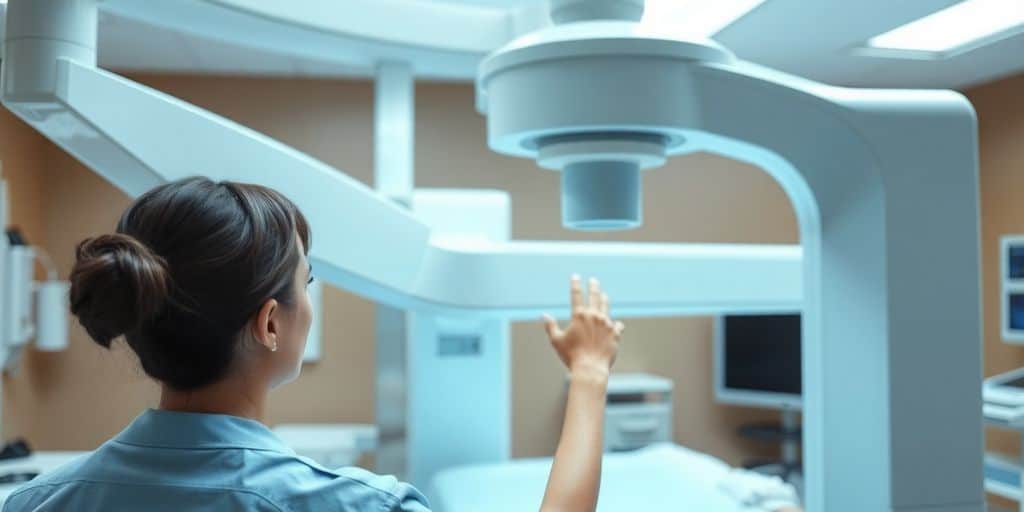
The undergraduate radiology program provides a solid foundation in physics, anatomy, physiology, and medical imaging techniques, preparing professionals to work in diagnostic imaging, a crucial area of medicine. Furthermore, the program covers professional ethics, radiation safety, and effective communication, enabling students to deal with patients safely and responsibly.
The training includes practical experience in hospitals, clinics, and imaging centers, where students apply their knowledge under supervision. The three-year, six-semester program balances theory and practice to prepare technicians capable of contributing to quality and safety in healthcare.
Where to study Radiology in Brazil?
Finding the right institution to study radiology is a crucial step, as the choice directly impacts your education and future opportunities. In Brazil, there are options at both public and private universities, each with its own characteristics. Therefore, it's essential to conduct thorough research before making a decision.
Public universities are recognized for their quality teaching and generally charge no tuition fees, but they have highly competitive admission processes, such as entrance exams or ENEM scores. Federal and state universities offer the program, and it's worth checking out their curricula, faculty, and infrastructure.
Private universities, on the other hand, tend to have more vacancies and less competitive selection processes, although costs vary. Many offer scholarships, discounts, and financing, as well as partnerships with hospitals to facilitate internships. It's essential to confirm MEC recognition and program evaluation to ensure a good education.
Radiology course curriculum
The radiology course curriculum is quite comprehensive, offering a solid foundation that balances theory and practice. You'll find essential subjects such as human anatomy, which is fundamental to understanding the structure of the body, and human physiology, which explains how body systems function. Additionally, the course includes radiology management and biosafety.
The development of professional ethics also receives special attention, preparing students to act correctly in various everyday situations. radiation safety is a central issue, ensuring the protection of both technicians and patients. Effective communication techniques are also part of the curriculum, essential for dealing with patients who often arrive anxious or worried.
Another key feature of the course is its emphasis on practical experience. Practical experience typically occurs in hospitals, clinics, or imaging centers, where students apply their knowledge under the supervision of experienced professionals. This experience is crucial for developing competent radiology technicians, ready to face the challenges of the market and begin their careers with confidence and preparation.
What is a career in Radiology like?
A career in radiology offers diverse opportunities in settings such as hospitals, clinics, and diagnostic imaging centers. Professionals in this field play an essential role in the healthcare team, assisting in the diagnosis and treatment of various medical conditions.
On a daily basis, the radiology technologist prepares equipment, maintains direct contact with patients, explains procedures, and ensures their comfort during exams. operates the devices accurately, adjusting the technical parameters to obtain high-quality images. After the exam, the professional analyzes the images, processes the files, and forwards them to the physician responsible for interpretation.
Safety is a fundamental aspect of this profession. Professionals must follow strict protocols to minimize radiation exposure, use personal protective equipment, and ensure proper calibration of equipment. Furthermore, the field requires constant training to keep up with new technologies and imaging techniques.
What is the average salary of a radiologist?
Understanding compensation in the field of Radiology is crucial for anyone aspiring to this career. A professional's salary can vary significantly, depending on factors such as experience, region of the country, and the type of institution where they work, whether public or private.
According to recent data, the average salary of a Radiology Technologist in Brazil is around R$4.286,78. However, some professionals earn higher or lower amounts than this average. Specialties within Radiology, such as Radiotherapy and Magnetic Resonance Imaging (MRI), tend to offer higher salaries due to the greater complexity and specialization required.
Furthermore, it's worth noting that the state of São Paulo has one of the highest average salaries for radiology technologists, reaching R$7.413,45, possibly due to the region's concentration of specialized hospitals and clinics. Furthermore, the level of specialization also influences compensation, as a specialized technologist can earn an average salary of R$4.601,48.
Is it worth taking the Radiology course?
Deciding to invest in a radiology course is an important choice that, therefore, should consider your professional goals and expectations. The area offers several opportunities and, in addition, a growing market, especially due to the growing demand for imaging diagnostics.
The radiology program, in turn, is a higher education program and provides a solid foundation in physics, anatomy, imaging techniques, professional ethics, and radiation safety. Furthermore, the practical component, conducted in hospitals and clinics, allows students to apply their knowledge under supervision, preparing them for the day-to-day work of the profession.
Upon completion, professionals will be qualified to work as radiology technicians, contributing to accurate diagnoses and quality healthcare. With starting salaries ranging from R$3.300 to R$8.900, as well as opportunities for advancement, this career is an excellent option for those seeking stability, technology, and positive prospects in the healthcare sector.
So, we've reached the end of our content on the radiology course. We hope it was helpful. But if you still have questions, be sure to check out our content with professions on the rise.